
Bones & Joints
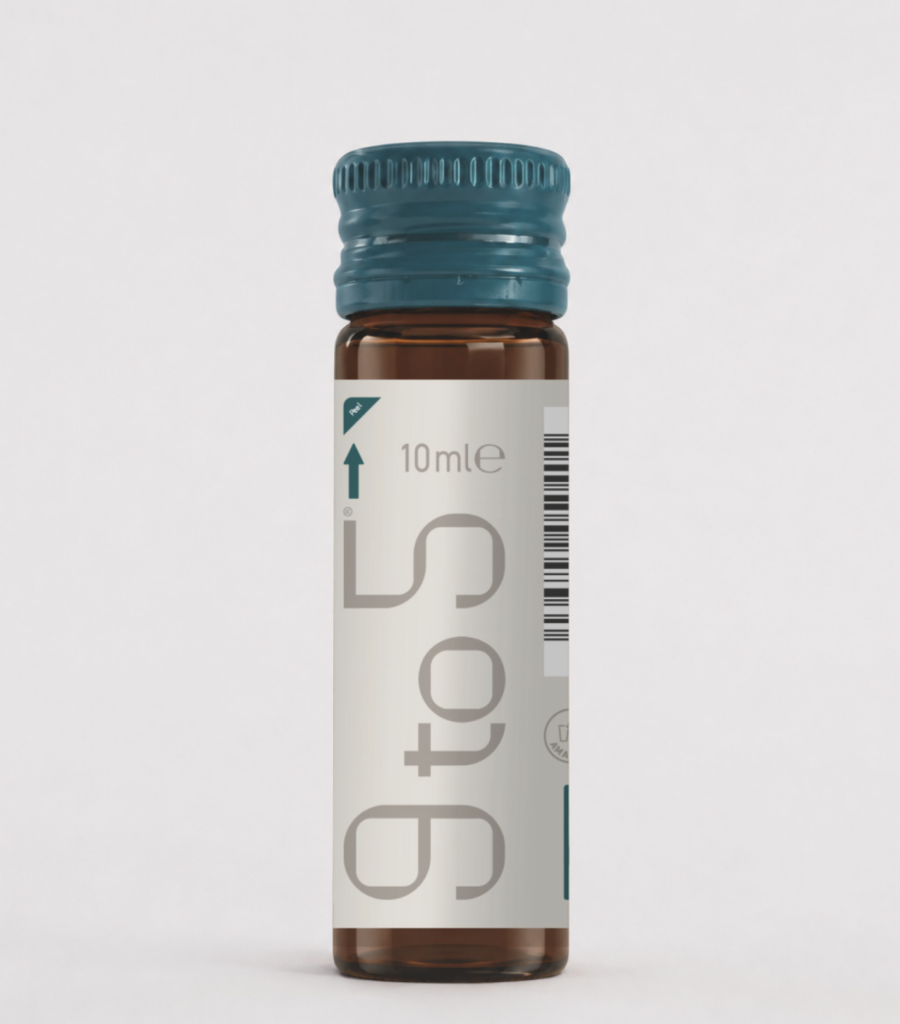
Muscles Supplement Vial – Triple Magnesium
One mineral, three forms, your whole workday covered.
THE FACT
3 in 5 workers in the EU report pain or discomfort in their muscles, bones or joints related to their work¹.

SOUND FAMILIAR?
You reach the end of the day with heavy legs, tense shoulders, and trouble focusing on that last meeting.
You assume it’s just normal tiredness but your body might be asking for something very specific.
THE BRIDGE
That’s why Muscles Supplement Vial – Triple Magnesium exists: a magnesium supplement designed for end-of-day fatigue, in a single dose.

Origin / why
We chose a triple-magnesium blend — citrate, pidolate, and sulfate — for a comprehensive formula. One morning dose, designed to support you throughout the day.
References
1. European Agency for Safety and Health at Work (EU-OSHA). Work-related MSDs: prevalence, costs and demographics in the EU. Bilbao: EU-OSHA; 2019. p. 5. Available from: https://osha.europa.eu/sites/default/files/Work_related_MSDs_prevalence_costs_and_demographics_in_EU_summary.pdf

Jordina Casademunt
9to5 Nutritionist
“If tiredness tends to hit every afternoon, look at your day as a whole. Long hours sitting, too few breaks, unbalanced meals or not getting enough sleep can all add to fatigue. Taking care of these habits, together with an adequate intake of nutrients such as magnesium, can help address tiredness from several angles.”
Nutritional
 Tap on each ingredient to learn more.
Joint structure
Collagen formation — Vitamin C
Bone health
Additional support

Composition and dose (1 vial, 25 ml)
Magnesium (citrate, pidolate, sulfate)
375 mg / vial (25 ml) — 100% NRV*
*NRV: Nutrient Reference Values
Full ingredient list
Purified water; fructose; magnesium L-pidolate; magnesium sulfate; magnesium citrate; emulsifiers (lecithins and polysorbate 20); flavourings; acidity regulator (citric acid); preservative (potassium sorbate); thickener (xanthan gum); sweeteners (sodium cyclamate and sucralose); colouring (beta-carotene).
Warnings
Food supplements should not be used as a substitute for a varied, balanced diet and a healthy lifestyle. Do not exceed the recommended daily dose. Keep out of reach of young children.
Contraindications
Moderate-to-severe renal impairment; myasthenia gravis; advanced heart block; pregnancy and breastfeeding (due to sodium cyclamate).
Interactions
Antibiotics (tetracyclines, fluoroquinolones) and bisphosphonates: space doses 2-4 hours apart. Diuretics: monitor magnesium levels with your doctor. High-dose calcium, iron and zinc: taken at different times of day. Vitamin D3, omega-3 and B vitamins: compatible combination.
References
1. AESAN (Spanish Agency for Food Safety and Nutrition). Tabla de declaraciones de propiedades saludables autorizadas — artículo 13. Madrid: AESAN; 2012. Available from: https://www.aesan.gob.es/AECOSAN/docs/documentos/seguridad_alimentaria/gestion_riesgos/Tabla_declaraciones_autorizadas_art13.pdf
2. Werner T, Kolisek M, Vormann J, et al. Assessment of bioavailability of Mg from Mg citrate and Mg oxide by measuring urinary excretion in Mg-saturated subjects. Magnes Res. 2019;32(3):63-71.
Pardo MR, Garicano Vilar E, San Mauro Martín I, Camina Martín MA. Bioavailability of magnesium food supplements: a systematic review. Nutrition. 2021;89:111294.
Education

01
Eye-opening fact
2.4 billion people worldwide (31% of the global population) fall short of adequate magnesium intake¹.

02
Myth vs. reality
Myth:
“All magnesium supplements have a laxative effect.”
Reality:
It depends on the chemical form. Magnesium oxide, for example, is barely absorbed (around 4%), and that excess can trigger the well-known laxative effect. Citrate and pidolate (both in Muscles – Triple Magnesium) are better absorbed and less likely to cause it.²,³

03
Top ingredient (fun fact
Most of the magnesium in your body (50-60%) is stored in your bones. That’s why this mineral has as much to do with bone health as it does with energy, muscles or rest.³

04
9to5 tip
Fatigue can take many forms. That’s why supporting your energy starts with taking care of several key pillars, such as rest, nutrition, movement, and essential micronutrients.
Evidencia científica
1. Passarelli S, Free CM, Shepon A, Beal T, Batis C, Golden CD. Global estimation of dietary micronutrient inadequacies: a modelling analysis. Lancet Glob Health. 2024;12(10):e1590-e1599.
2. Pardo MR, Garicano Vilar E, San Mauro Martín I, Camina Martín MA. Bioavailability of magnesium food supplements: a systematic review. Nutrition. 2021;89:111294.
Office of Dietary Supplements, National Institutes of Health (NIH). Magnesium — Health Professional Fact Sheet. Bethesda (MD): NIH; 2026. Available from: https://ods.od.nih.gov/factsheets/Magnesium-HealthProfessional/

Did you find this helpful?
Join the 9to5 community. Receive practical information about nutrition, wellbeing and health in the workplace, along with new content and the latest news from 9to5.
No unnecessary messages.
Just information you may find useful.
FAQs
Can’t find the answer? Ask our nutritionist.
Do you have a question about Muscles – Triple Magnesium or would you like to know how to incorporate it into your routine? Our nutrition team will respond with information based on scientific sources and will take into account the details you provide.